Final project
Calvinism
1. Who was John Calvin?
Born in France in 1509, theologian/ecclesiastical statesman John Calvin was Martin Luther's successor as the preeminent Protestant theologian. Calvin made a powerful impact on the fundamental doctrines of Protestantism, and is widely credited as the most important figure in the second generation of the Protestant Reformation. He died in Geneva, Switzerland, in 1564.
Leading Figure of Reformation
Calvin lied in Geneva briefly, until anti-Protestant authorities in 1538 forced him to leave. He was invited back again in 1541, and upon his return from Germany, where he had been living, he became an important spiritual and political leader. Calvin used Protestant principles to establish a religious government; and in 1555, he was given absolute supremacy as leader in Geneva.

2. What was Calvinism about?
The main objective that Juan Calvino had was to extend
his ideas to get to understand the different matters of faith that Marín Luther
had established, and for that he sought refuge in Switzerland, to be persecuted
in his native town. According to Calvin, the principle of absolute
predestination was the only responsible that could explain the destiny of men
on Earth. This principle defended the idea that, depending on the will of God,
some elect would have the right to eternal salvation and others would be
condemned to hell. God's favor was closely associated with the way in which he
led a materially prosperous life through work

3. In which country it took place?
In the sixteenth century, Calvinism spread through the
Netherlands and some regions bordering Germany, France, England, Hungary,
Lithuania and Poland. Emigration to North America brought Calvinism to the
Mid-Atlantic United States and New England, where most of the settlers were
Calvinists. They included the English Puritans, the French Huguenots, the Dutch
settlers of New Amsterdam, and the Irish-Scottish Presbyterians of the
Appalachian Mountains. The Dutch Calvinist settlers were the first Europeans to
colonize South Africa. They were later known as Boers or
Afrikaners.

▼△▼△▼△▼△▼△▼△▼△▼△▼△▼△▼△▼△▼△▼△▼△▼△▼△▼△▼△▼△▼△▼△▼△▼△▼△▼△▼△
Religion
1. Explain what was the reformation
The reformation was a schism in Western Christianity initiated
by Martin Luther and continued by Huldrych
Zwingli, John
Calvin and other Protestant Reformers in 16th century Europe.

2. List the of causes of
the reformation:
Over the centuries, the Roman Catholic church had become more and more involved in the politics of western Europe and by the 16th century, it had immense power. This resulted in political manipulations, increasing wealth and corruption. Clergy would sell spiritual privileges and use the pulpit to preach their own views. As the Bible was in Latin, regular people had no idea of what it actually said, which greatly upset Reformers like Martin Luther, who felt that the church has gone bankrupt spiritually.
Over the centuries, the Roman Catholic church had become more and more involved in the politics of western Europe and by the 16th century, it had immense power. This resulted in political manipulations, increasing wealth and corruption. Clergy would sell spiritual privileges and use the pulpit to preach their own views. As the Bible was in Latin, regular people had no idea of what it actually said, which greatly upset Reformers like Martin Luther, who felt that the church has gone bankrupt spiritually.
- The Abandonment of Rome by the Popes.
- The Rise of Nationalism.
- The Black Death.
- The Decline of Latin.
- Corruption in the Church.

3.Make a short brief
summary martin luther’s life
Martin Luther (November 10, 1483 to February 18,
1546) was a German monk who began the Protestant Reformation in the
16th century, becoming one of the most influential and controversial figures in
Christian history. Luther called into question some of the basic tenets of
Roman Catholicism, and his followers soon split from the Roman Catholic Church
to begin the Protestant tradition. His actions set in motion reform within the
Church. A prominent theologian, Luther’s desire for people to feel closer to
God led him to translate the Bible into the language of the people, radically
changing the relationship between church leaders and their followers.

4. Explain what is an
indulgence, what is an indulgence ,how it Works
The Decree of Indulgence for Divine Mercy Sunday
grants a plenary or full indulgence to those who satisfy certain conditions established
by the Church and a partial (incomplete) indulgence to those who fulfill some
but not all or the conditions.

5. Explain the major characteristics of the three most important religions in Europe in 1500
Anglicanism: is a Western Christian
tradition that evolved out of the practices, liturgy and identity of the Church of England following the Protestant Reformation.
Calvinism: is a major branch of Protestantism that follows the theological tradition
and forms of Christian practice of John Calvin and other Reformation-era theologians.
Lutheranism: is a major branch of Protestant Christianity which identifies with the theology of Martin
Luther (1483–1546),
a German friar, ecclesiastical reformer and
theologian.

▼△▼△▼△▼△▼△▼△▼△▼△▼△▼△▼△▼△▼△▼△▼△▼△▼△▼△▼△▼△▼△▼△▼△▼△▼△▼△▼△
• Type of religion: Monotheistic
• Sacred books: Bible
• Origin: Augsburg, Germany
• Deities: God, Jesus Christ and the Holy Spirit.
What is Lutheranism?
1. It is a Protestant reform created by Martin Luther which is constituted by a group of churches originated on the basis of the Lutheran reform, which seeks to return to primitive Christianity and reform the Christian tradition.
What is Lutheranism?
2. Lutheranism in the Protestant Christian religious movement that believes in Jesus Christ as its only spiritual founder, that God is next to the Trinity, namely: God the Father, God the Son and God the Holy Spirit.
Characteristics of Lutheranism
• His sacraments are only baptism and the Eucharist.
• They did not believe in the transformation of bread and wine into the blood and body of Christ.
• For Lutherans, the saints and the Virgin Mary are not mediators, they are just examples to follow.
• They do not accept the Pope.
• Pastors who lead the Lutheran church can get married.
• Emphasizes the word of God and the preaching of it.
• Faith is the only thing that can justify us by the grace of God.
• The scriptures of the Old Testament and the New Testament are the only rules that govern life.
• Jesus is the only foundation of faith.

2. Sacred books: The Bible
3. Origin: England
4. Deities: God (Most Holy Trinity)
5. What is Anglicanism?
1. Anglicanism is one of the religious expressions of Christianity that derives from the Protestant Reformation of the sixteenth century. An almost exclusive religion of England that arose from Enrique VIII that looked for to separate of the Catholic Church.
What is Anglicanism?
2. Today it is considered that Anglicanism is an intermediate position that occurs between Catholicism and Protestantism, and the two religions are seen as extreme positions within the same religion. The Anglicans continue practicing several of the traditions and Catholic celebrations that give importance to written texts, however they have their own text on which different prayers are made.
Characteristics of Anglicanism
• It is based on the teachings of Jesus Christ.
• Has historical links with the Christian Church of England.
• They share rites and beliefs with the Roman Christian church.
• It is one of the oldest churches in the world.
• It has approximately 85 million members around the world.
• The church is led by the archbishop of Canterbury.

• Sacred books: Bible
• Origin: Augsburg, Germany
• Deities: God, Jesus Christ and the Holy Spirit.
What is Lutheranism?
1. It is a Protestant reform created by Martin Luther which is constituted by a group of churches originated on the basis of the Lutheran reform, which seeks to return to primitive Christianity and reform the Christian tradition.
What is Lutheranism?
2. Lutheranism in the Protestant Christian religious movement that believes in Jesus Christ as its only spiritual founder, that God is next to the Trinity, namely: God the Father, God the Son and God the Holy Spirit.
Characteristics of Lutheranism
• His sacraments are only baptism and the Eucharist.
• They did not believe in the transformation of bread and wine into the blood and body of Christ.
• For Lutherans, the saints and the Virgin Mary are not mediators, they are just examples to follow.
• They do not accept the Pope.
• Pastors who lead the Lutheran church can get married.
• Emphasizes the word of God and the preaching of it.
• Faith is the only thing that can justify us by the grace of God.
• The scriptures of the Old Testament and the New Testament are the only rules that govern life.
• Jesus is the only foundation of faith.

Calvinism:
What is Calvinism?
1. Calvinism is a term that can refer to the set of doctrines professed by the Protestant churches, but at the same time, it is a set of concepts of theology, ethics, society and politics that left an important mark on society.
What Calvinism consists of
2. The main objective of Juan Calvino was to extend his ideas in order to understand the different matters of faith that Marin Luther had established, and for that he sought refuge in Switzerland, when persecuted in his native town. According to Calvin, the principle of absolute predestination was the only responsible that could explain the destiny of men on Earth.
Characteristics of Calvinism
• Calvinism bases its beliefs on Christ.
• Refers that all designs come from God, who is the one who has total authority over things.
• It can be defined as a system of Protestant Christian theology.
• They do not consider the priesthood as a sacrament.
• Declare the absolute belief in God and his sovereignty.
• Salvation for Calvinists is not earned by good works, but by faith in the grace of God.
• For them God is sovereign, omnipotent and intervenes in all fields of human life.
• Man depends totally on God.
• They are based on the five points of Calvinism.


Anglicanism:
1. Type of religion: Monotheistic2. Sacred books: The Bible
3. Origin: England
4. Deities: God (Most Holy Trinity)
5. What is Anglicanism?
1. Anglicanism is one of the religious expressions of Christianity that derives from the Protestant Reformation of the sixteenth century. An almost exclusive religion of England that arose from Enrique VIII that looked for to separate of the Catholic Church.
What is Anglicanism?
2. Today it is considered that Anglicanism is an intermediate position that occurs between Catholicism and Protestantism, and the two religions are seen as extreme positions within the same religion. The Anglicans continue practicing several of the traditions and Catholic celebrations that give importance to written texts, however they have their own text on which different prayers are made.
Characteristics of Anglicanism
• It is based on the teachings of Jesus Christ.
• Has historical links with the Christian Church of England.
• They share rites and beliefs with the Roman Christian church.
• It is one of the oldest churches in the world.
• It has approximately 85 million members around the world.
• The church is led by the archbishop of Canterbury.

▼△▼△▼△▼△▼△▼△▼△▼△▼△▼△▼△▼△▼△▼△▼△▼△▼△▼△▼△▼△▼△▼△▼△▼△▼△▼△▼△
Glossary
1. Renaissance: it
means "rebirth", an era which emphasizes education, art and critical
thinking.
2. Vernacular: native language or dialect of a country or
region.
3. Utopia: a word in Greek, it means No-Place.
4. Reformation: the reform movement that split the Roman
Catholic Church in Europe and established a new branch of Christianity:
Protestantism.
5. Protestant: any Christian Church that broke away from the
roman catholic church during the reformation.
6. Peace of Augsburg: first permanent legal basis for the
coexistence of Lutheranism a d Catholicism in Germany.
7. Catholic Reformation: revival
Movement within the Catholic Church spurred by the attacks of the Protestant
Reformation.
8. Council of Trent: the
Council of Trent was the Roman Catholic Church's response to the Protestant
Reformation.
▼△▼△▼△▼△▼△▼△▼△▼△▼△▼△▼△▼△▼△▼△▼△▼△▼△▼△▼△▼△▼△▼△▼△▼△▼△▼△▼△
Spanish Influence in other countries of Central America

- Central America is no younger child of Spain.
- Christopher Columbus himelf discovered Honduras in 150.
- Sailed south along the Mosquito coast of Nicaragua and discovers land and he calls it Costa Rica(literally "Rich Shore").
- There, for the first time on this voyage, the Spaniards found golding the ornaments worn by the natives.
- The ornaments were treasures to the Indians then, for gold was no common metal there.
- Guatemala, one of the greatest barbaric civilizations which history has ever seen, that of the Mayas, a wealth and a civilization of which the Spaniards were as yet entirely ignorant.

What was the Coronado?
History:
But less than 150 years ago, the peninsula was an unoccupied Spanish hacienda, covered with nothing but coastal scrub.In the 19th century that Coronado caught the attention of wealthy investors, and it was only about 25 years ago that Coronado Beach Resort became an important part of the resort community.
In 1542, Juan Rodriguez Cabrillo claimed the port of San Miguel for the Spanish crown. Sixty years later, Sebastian Vizcaino renamed the site San Diego. His crude map of the area included the Coronado peninsula, which means “Crowned One” in Spanish. Vizcaino was the last European to visit the area for 167 years.
In 1769, Russia began settling western North America. Concerned about his rival’s encroaching presence, King Carlos III of Spain sent missionaries and soldiers to establish a presidio and mission at San Diego, the first official city in Alta California.
In 1821, Mexico gained its independence from Spain and the newly-formed government began issuing land grants to prominent citizens and loyal Mexican military officers. In 1846, Governor Pio Pico gave Coronado to Don Pedro Carillo, who began using the land to raise cattle. Five months later, Carillo sold the land to an American captain for $1,000.
Coronado was incorporated as a town on December 11, 1890. The land was purchased by Elisha Spurr Babcock, along with Hampton L. Story, and Jacob Gruendike. Their intention was to create a resort community, and in 1886, the Coronado Beach Company was organized. By 1888, they had built the Hotel del Coronado, and the city became a major resort destination. They also built a schoolhouse, and formed athletic, boating, and baseball clubs.
Coronado is a resort city located in San Diego County, California, across the San Diego Bay from downtown San Diego. It was founded in the 1880s.

Francisco Vazquez del Coronado:
Francisco Vázquez de Coronado was born in Salamca, Spain
(1510).
Vázquez de Coronado enjoyed the support of Antonio de Mendoza, the viceroy of Mexico.
Vazquez de Coronado rose up within the colonial government, receiving an appointment to the governorship of Nueva Galicia.
Vázquez de Coronado enjoyed the support of Antonio de Mendoza, the viceroy of Mexico.
Vazquez de Coronado rose up within the colonial government, receiving an appointment to the governorship of Nueva Galicia.
Exploring
American Southwest: Vazquez de Coronado set out about 300 Spanish soldiers and
1,000 Indians. The expedition encountered a group of Zuni Indians in New
Mexico. Vazquez de Coronado and his men soon clashed with the Zunis and took over
Zuni Village. Disappointed by the expedition’s failure to find golden city, he
send his men into different directions to investigate further.
Vazquez de Coronado spent the winter in Tiguex, a community made of several Pueblo Indian villages. He and his expedition had a falling out with the local peoples over supplies. Vazquez moved on the spring, heading east over Pecos River. They continued to search through Texas, Oklahoma and Kansas, before giving up their request.
Vazquez de Coronado spent the winter in Tiguex, a community made of several Pueblo Indian villages. He and his expedition had a falling out with the local peoples over supplies. Vazquez moved on the spring, heading east over Pecos River. They continued to search through Texas, Oklahoma and Kansas, before giving up their request.

▼△▼△▼△▼△▼△▼△▼△▼△▼△▼△▼△▼△▼△▼△▼△▼△▼△▼△▼△▼△▼△▼△▼△▼△▼△▼△▼△
Chapter 6
Chapter 6
How would you react to a Revoluntionary idea?
I am not sure how I would
react. I don’t think I’ll be able to just go with the flow of it, I usually
have to really agree with an idea to really go with it. It amazed me how people
likes to control others. There are so many people that would just go along with
things, but there are some that did revolt in history. I feel like I’m that
type of person nit because I like to disagree but that’s because I know what I
want. I feel like people question things so much more today than they would
have hundred years ago. People nowadays really have question for everything. It
is really like the idea of doubts where everyone challenges an idea or thought
even if it could be right. I’m a person that questions a lot of things and
wants to know why.
_________________________________________________________________________
They are highly wrapped up in religion and
were too afraid because of the consequences many people got for speaking up.
Persecution, ostracized from society,
excommunication, put on trial, or jailed for life.
No progress,
society would stay the same.
▼△▼△▼△▼△▼△▼△▼△▼△▼△▼△▼△▼△▼△▼△▼△▼△▼△▼△▼△▼△▼△▼△▼△▼△▼△▼△▼△
Francis Bacon
Bacon was born on January 22,1561 in London, England.
Bacon served as attorney general and Lord Chancellor of England, resigning amid charges of corruption. Bacon took up Aristotelian ideas, arguing for an empirical, inductive approach, known as the scientific method, which is the foundation of modern scientific inquiry.
Best work: His best work is "New Organum" (1620), he explained the induction method by experiment and observation and established the empirical theory as a research method of modern science. Empirical theory is that the experience is gradually accumulated by repeated observation and experiments, and consequently the truth is reached.
Early life: Francis Bacon was born in London on January 22, 1561. His father was Nicolas Bacon, Lord Keeper of the Seal. His mother Anne Cooke Bacon was second wife of Nicolas.
At the age of 12, Bacon studied on Trinity College. He completed the course of study on Trinity. In the following year he enrolled in a law program at Honorable Society of Gray's Inn.
At the age of 12, Bacon studied on Trinity College. He completed the course of study on Trinity. In the following year he enrolled in a law program at Honorable Society of Gray's Inn.
Counsel and Statesman: Bacon worked as a member of Cornwall, House of Commons. He was able to return to Gray's Inn and complete his education. In 1522, he was appointed for outer barrister. Bacon's political career took a big leap forward after he composed a Letter of Advice to Queen Elizabeth. Bacon held his place in Parliament for nearly four decades. Bacon continued to work his way swiftly up the legal and political ranks, achieving solicitor general and attorney general six years later. When Bacon became Viscount St. Albans, he was accused for accepting bribes and impeached by Parliament for corruption. After he confessed, he was fined a hefty 40,000 pounds and sentenced into the Tower of London, luckily his sentence was reduced and his fine was lifted.
Philosopher of Science: Bacon reained in St. Alban's after he collapse of his political career. He could now focus on one of his other passons, the philosophy of science. When he reached adulthood, Bacon was determined to change the aspect of natural philosophy. Bacon's approach emphasized experimentation and interaction, culminating in "the trade of the mind with things." Bacon's new scientific method involved the collection of data, its prudent analysis and the realization of experiments to observe the truths of nature in an organized way. He believed that when approached in this way, science could become a tool for the betterment of humanity.
Death and Legacy: in March 1626, Bacon was performing a series of experiments with ice. While testing the effects of cold on the preservation and decay of meat, he stuffed a hen with snow near Highgate, England, and caught a chill. Ailing, Bacon stayed at Lord Arundel's home in London. The guest room where Bacon resided was cold and musty. He soon developed bronchitis. On April 9, 1626, a week after he had arrived at Lord Arundel's estate, Francis Bacon died.

▼△▼△▼△▼△▼△▼△▼△▼△▼△▼△▼△▼△▼△▼△▼△▼△▼△▼△▼△▼△▼△▼△▼△▼△▼△▼△▼△
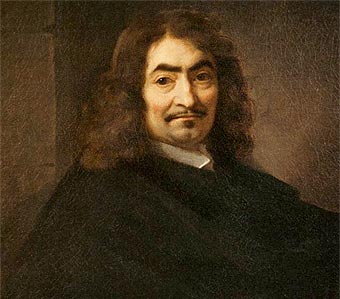
René Decartes
René Descartes is one of the greatest and most renowned European philosophers that history has given.
Considered by many as the father of modern philosophy and rationalism and radical mechanics, he considered that all knowledge should be submitted to judgment, using methodical doubt as a method to achieve knowledge through different steps.
Methodical doubt, the importance of mathematics as the purest of sciences, ideas and the search for the simplest elements, substances, modes and attributes, the separation between soul and body, res cogitans and res extensa, the evil genius, God, the provisional morality, the Cartesian axes ...
All these concepts and ideas were worked by Descartes throughout his life and have influenced the Western way of thinking in one way or another.
Key Contributions
The Discourse of the Method: book where several of the primordial ideas of the modern scientific philosophy are extracted, like for example:
• The Cartesian Method: Decompose complex problems into simpler parts; as many times as necessary until finding comprehensible solutions that allow to solve then the original problem.
• The Methodical Doubt: Use doubt as a fundamental tool to achieve knowledge. Through the questioning of acquired and accepted knowledge, it is possible to reconstruct the knowledge needed to understand the world.
Descartes also applied his method to the mathematical study, Developing a system of mathematical study called Analytical Geometry.
Comentarios
Publicar un comentario